
The Pledge of Allegiance has largely become meaningless repetition in this country. We say the words we were taught without thinking of what they mean now or what it meant to those who penned it. In 1969, Red Skeleton recited the pledge and explained the meaning of each phrase as he went. Each time I hear it, it reminds me of it’s depth and importance. If you haven’t heard it, you can here: Pledge of Allegiance – Red Skeleton.
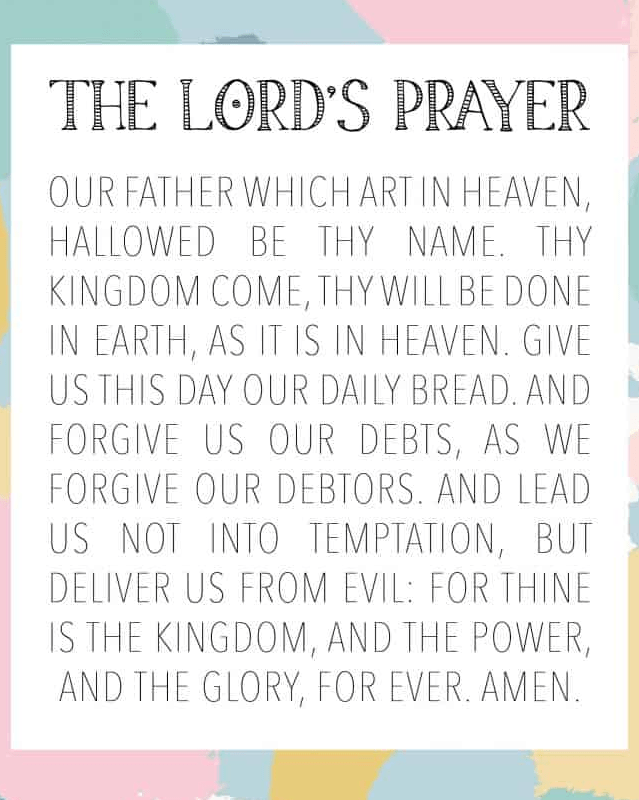
Similarly, the Lord’s Prayer (Mathew 6:9-13) is largely said without thought of the meaning behind the words. We simply repeat what we were taught and say “we prayed today,” without allowing it to make a difference in our life (Matthew 6:7). So take a few minutes and discover the depth and importance of The Lord’s Prayer.
“Our Father which art in heaven” – As children of God, we are talking directly to the almighty creator and sustainer of the universe and everything in it (Genesis 1). However, He allows us to call Him, Father (John 1:12) and present our trials and praises to Him, even when we don’t have the words (Romans 8:26). While He may reside in a place beyond our understanding (Revelation 21-22), He still is right beside us when we need him (Psalm 16:8).
“Hallowed be your name” – His name is also his nature, God is love, holy, just, all knowing, all powerful, all present and so much more, and therefore worthy of respect and honor. The Old Testament has so many names that were used that described God by his actions or character (including Almighty [Genesis 17], Provider [Genesis 22], Creator [Genesis 1], etc.). There’s a book called Praying the Names of God by Ann Spangler that takes a look at the names and their meanings.
“Your kingdom come” – God is still in control and is making things work together to further His plans and glory (Ephesians 1:11).
“Your will be done on earth as it is in heaven” – Everything in Heaven is in perfect submission to God’s will and we will live there one day. However, in the meantime on earth, we see and feel the effects of man’s sinful nature in fallen creation. We long for God’s will (both revealed in Scripture and the unknown [Deuteronomy 29:29]) to be accomplished (John 4:34) and do our part to live with obedience to bring about His will for our life.
“Give us this day our daily bread” – Just like in Exodus 16, God provides for us what we need and often what we want. It’s more than just physical needs of food, clothing and shelter. He provides peace (Philippians 4:6-7), love (1 John 4:7-8), mercies (Lamentations 3:22-23), rest (Matthew 11:29-30), direction (Proverbs 3:5-6) and so much more every day.
“And forgive us our debts, as we forgive our debtors” – People fail us every day and we fail God every day. So as we forgive those that wronged us, we too should be daily asking God to forgive us (1 John 1:8-9). This is not saving forgiveness because when you accepted Christ, He paid the penalty of sins past, present and future. This requested forgiveness is a reminder that you know who is in charge and that we keep ourselves humble and be accountable to prevent it from becoming habitual sin, so our relationship with Him and testimony to man isn’t muddied (Hebrews 12:1-3).
“And lead us not into temptation” – God is not tempted and He doesn’t tempt anyone, but we are tempted by our sin nature (James 1: 13-15). We ask that God lead us in the paths of righteousness (Psalm 23:3b) rather than allowing us to follow our own paths and sinful desires. And to show us how to escape from our temptations (1 Corinthians 10:13).
“But deliver us from evil” – God knows that even when we follow Him, we will still give in to our sin nature and will need rescue and resuscitation to resume growing as the new creation He called us to be (2 Corinthians 5:17). We long for Him to restore the close relationship we may feel is lost (Psalm 66:18).
“For thine is the kingdom, and the power, and the glory, for ever. Amen” – While this part is only in some versions of the Bible, it does round things up nicely. We acknowledge that God is the one in control and deserves the praise for anything good in our lives (James 1: 17-18). God always has been and always will be, and is the authority for all. This prayer is a statement to be trusted or “so be it” (as they’d say on Star Trek, “make it so”).
So, with reflection, and consideration, let us pray –
 Our Christian Journey: How Do We Do Well?
One response to “The Lord’s Prayer Revisited”
[…] For more info on prayer, see The Lord’s Prayer Revisited. […]
LikeLike